
As healthcare systems, financial institutions, insurance carriers, and corporate employers rapidly deploy automated decision-making systems, artificial intelligence is no longer just a backend efficiency tool—it is directly influencing critical human outcomes. From AI-driven radiology software flagging false negatives in cancer screenings to automated insurance algorithms systematically denying valid medical claims, machine learning models are making high-stakes decisions every day. However, when these non-deterministic models suffer from “hallucinations,” biased training data, or software perception bugs, the resulting harms can be catastrophic.
When an algorithm causes physical, financial, or severe emotional harm, traditional tort frameworks face unprecedented strain. Is the harm caused by a doctor’s blind reliance on an algorithm (medical malpractice), a software design flaw engineered by a tech company (product liability), or an enterprise’s failure to audit its tools (corporate negligence)? Finding specialized legal representation in this emerging field is critical. This guide outlines how to evaluate, compare, and select top-tier AI liability and algorithmic malpractice lawyers to handle complex technology claims.
Understanding the Frontiers of AI Liability & Algorithmic Malpractice
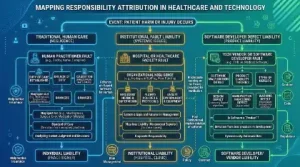
To choose the right legal counsel, it is essential to understand where algorithmic harms occur and how specialized law firms approach these distinct categories of litigation:
- Medical AI & Clinical Malpractice: Occurs when healthcare providers rely on algorithmic diagnostic tools (such as AI mammography, triage prioritization bots, or robotic surgery platforms) that misread patient data, leading to delayed diagnoses or fatal treatment errors.
- Automated Claim Denials & Insurance Bad Faith: Involves health and casualty insurers using black-box algorithms to batch-reject legitimate patient claims or cut off necessary treatment without individualized human review.
- Algorithmic Discrimination & Civil Rights: Encompasses automated hiring, credit-scoring, or tenant-screening models that embed systemic racial, gender, or age biases into automated selection processes.
- Autonomous System Failures: Involves self-driving vehicle software, industrial robotics, or automated logistics platforms failing to perceive road hazards or human bystanders, resulting in traumatic brain injuries or wrongful death.
Key Criteria for Selecting an Algorithmic Malpractice Law Firm
Because AI litigation blends cutting-edge computer science with complex tort law, selecting a generic personal injury or malpractice attorney is often insufficient. Top-rated AI liability trial firms possess distinct technical and legal capabilities.
1. Technical Fluency & In-House Data Science Resources
Proving algorithmic fault requires peering inside the “black box”. Leading law firms do not rely solely on outside consultants; they retain dedicated in-house data engineers, software architects, and medical informatics experts. When vetting a potential law firm, ask whether their legal team knows how to subpoena, extract, and interpret critical technical artifacts:
- Training Data Provenance: Identifying whether the model was trained on skewed, non-representative, or corrupted datasets.
- Model Drift & Telemetry Logs: Proving that the developer or enterprise knew the model’s performance was degrading over time but failed to issue a patch.
- Explainability & Attention Maps: Demonstrating exactly why the algorithm made a specific erroneous decision at a given millisecond.
2. Experience Navigating Multi-Party Defense Strategies
In traditional medical malpractice, the defendant is typically a hospital or physician. In an AI liability case, defendants routinely point fingers at each other. Doctors claim they relied on “FDA-cleared software,” while software vendors argue the doctor breached the standard of care by failing to exercise independent clinical judgment. Premier trial attorneys understand how to defeat these “empty chair” defenses by bringing joint claims under both medical negligence and strict product liability theories.
Comparing Traditional Legal Claims vs. AI Malpractice Claims
| Litigation Feature | Standard Malpractice / Injury Case | AI Liability & Algorithmic Case |
|---|---|---|
| Core Cause of Action | Human breach of duty or driver error | Software design defect, data bias, or blind automation reliance |
| Primary Discovery Assets | Medical charts, depositions, police reports | Algorithm source code, neural net weights, model drift logs |
| Expert Witness Requirements | Medical doctors or accident reconstructionists | Biomedical informatics experts, AI ethicists, & software engineers |
| Defense Tactics | Denying negligence or arguing comparative fault | “Black Box” opacity claims, preemption, & vendor/clinician finger-pointing |
Essential Questions to Ask During Your Initial Attorney Consultation

When scheduling consultations with prospective law firms or reviewing curated attorney directories, use these targeted questions to evaluate their readiness for an algorithmic injury claim:
- “How do you handle the ‘Black Box’ defense when software code is proprietary?”
What to look for: The firm should discuss filing immediate protective orders and utilizing court-mandated algorithmic audits to compel code disclosure. - “Have you handled product liability or complex multi-district litigation (MDL) involving software defects?”
What to look for: Demonstrated success in high-tech product liability or multi-party litigation indicates the firm has the capital and infrastructure to battle well-funded tech defendants. - “How do you establish the legal Standard of Care for AI usage in this industry?”
What to look for: A strong attorney will explain whether local professionals are expected to verify AI outputs or if relying on the tool without human oversight constitutes negligence.
Fee Structures in AI Liability & Mass Tort Cases
Most reputable trial firms handling algorithmic malpractice and tech-driven personal injury operate on a contingency fee basis. Under this structure, clients pay no upfront legal fees or out-of-pocket litigation costs. The law firm advances all expenses—including expensive code analysis and expert witness retainers—and receives an agreed-upon percentage only if they secure a court verdict or negotiated settlement.
Because analyzing algorithmic code and retaining specialized AI experts can cost tens of thousands of dollars, ensure your retainer agreement explicitly states that case expenses are deducted only after a successful recovery.
Selecting the Right Legal Partner for Your Algorithmic Claim
As artificial intelligence continues to automate critical sectors of healthcare, insurance, and transportation, legal disputes will increasingly center on algorithmic accountability. Choosing a lawyer who understands how to bridge the gap between complex software architecture and jury-friendly courtroom storytelling is the single most important step in securing justice for an AI-inflicted injury.